
3 Ways Mid-Year Plan Reviews Help Avoid Benefits Renewal Bombshells

Ticking down to a benefits renewal bombshell? Mid-year plan reviews can diffuse it | Corporate Synergies
Plain and simple, your broker should review your plan mid-year before the actual benefits renewal.

As health and welfare benefits renewal time approaches each year, HR professionals begin to lose sleep over the threat of a renewal bombshell. Even if the benefits plan performance is monitored closely throughout the year, steadily rising healthcare and pharmacy costs and a host of other factors make it difficult to predict just how much the benefits renewal rate will increase for the next plan year. Without proper preparation, the employer could be in for a scary surprise.

Renewal rates are based on the benefits plan performance over the past year(s) in relation to the premium the employer has been paying. If claims have far exceeded the premium, be prepared to see a renewal rate increase.

Of course, there are many factors that play into the health and welfare benefits spend, including what type of plans are offered and the contributions from plan members, as well as things like pharmacy benefits.

Recently I’ve seen a surge in claims related to specialty pharmacy drugs that treat complicated illnesses like cancer and auto immune diseases (specifically inflammatory conditions). The factors that feed program costs are complex, which can make predicting the renewal rate even more difficult.

However, the broker’s underwriting staff can provide a window into the benefits plan performance and help the employer prepare for changes to mitigate rising costs and meet the budget. I call this the no- surprise renewal approach.

The key to a no-surprise benefits renewal is to proactively plan for rate adjustments as much as possible.

How a No-Surprise Benefits Renewal Works

The next step is to anticipate how the benefits program will be impacted by a rate adjustment. Data capture and analysis is central to these efforts. While not all employer groups have access to the same data—which depends on their size and funding—there is often enough information to shed light on how the renewal is tracking.

Six months before benefits renewal time, the benefits broker underwriter uses carrier formulas to analyze the plan and predict what the increase will be. This gives the employer the opportunity to discuss adjustments to the plan to meet the budget and program goals. For example, the employer might shift a higher level of contributions to plan members or change office visit copays, increase deductibles or out-of- pocket maximums.

How Pre-Renewal Analysis Helps Employers Meet Budget Goals

Consider this real-life example: Through pre-renewal analysis, a 110-participant fully insured group faced a 40% rate increase from their insurance carrier. During this analysis, we saw that the group’s pharmacy spend was largely contributing to the increase.

Many insurance carriers force groups to bundle medical and pharmacy benefits together. However, this carrier allowed us to separate medical and pharmacy benefits and choose a pharmacy benefits manager to reduce costs. Since then, renewal rate increases for this employer have been in the low single digits.

Pre-renewal analysis through underwriting also helped a 300-participant fully insured group with two plans in place: one HDHP plan that included an HSA and one plan that did not include an HSA. We uncovered that the plan including an HSA performed much better than the non-HSA plan. However, 75% of the group used the non-HSA plan and 25% used the plan with the HSA.

We worked with the group over a couple of years to increase utilization on the HSA plan by educating employees on health savings accounts and structuring the plan so it became more favorable to choose the HDHP with the HSA. Reviewing plans mid-year has allowed this group to renew at rates less than the 7-10% trend increase each year.

Carrier Negotiations

Bringing to the employer’s attention all of the factors that contribute to the health and welfare benefits plan performance mid-year, as opposed to during renewal time, presents the opportunity to increase their education efforts if they feel employees are not utilizing the plan as well as they could. It also gives the employer an opportunity to discuss changes to the plan design for the coming year.

Part of the no-surprise renewal also means setting the stage with the carrier so they know exactly what we’re looking for. Six months prior to the benefits renewal date we let the carrier know they are on notice with their potential increase, especially if we feel it’s higher than it should be. At that point we start the negotiating process by letting them know what increase is fair and reasonable given the benefits plan performance. A little bit of negotiation and understanding of how carrier formulas work can go a long way in helping employers prepare for a no-surprise renewal.


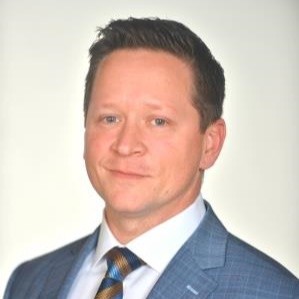
Luciano Franco oversees Corporate Synergies’ underwriting experts and functions, and is responsible for ensuring a common standard across the enterprise. He joined Corporate Synergies in 2007 after more than a decade of underwriting experience with CIGNA. He manages staff underwriters who provide in-depth guidance to clients and Corporate Synergies’ account service teams.

Share

Related Content

Latest Content

Want More?

On Demand Webinars​

View any of our past recorded webinars. Note that the recorded webinars are not eligible for CE credits.

Current Events Calendar ​

Learn from respected experts while you earn CE credits for select continuing education events, free of charge.​

Further Learning​

Never miss another event! Receive email alerts for upcoming events and service offerings.​

LIKE WHAT YOU'RE READING?

Get Notified!

We will send important benefits-industry information directly to your inbox as it becomes available, including accredited CE events.

Matt McCuen

National Executive at Imagine360

Matt McCuen is an industry veteran, with over 30 years of experience in the self-funded space.  

As the National Marketing Executive for Imagine360, Matt works with self-funded employers across the nation to improve the benefits they offer to their employees and families. 

Imagine360 is the leading provider of employer-sponsored health plan solutions that deliver deep cost savings and concierge member support. Leveraging 50+ years of expertise, Imagine360’s solutions combine the financial benefits of reference-based pricing, best-in-class member support, and health plan administration.  

Greg Santulli

CEO of Rx Valet

Greg Santulli is the CEO and Co-Founder of Rx Valet, an industry leading Pharmacy Cost Savings company. Greg has over 30 years of experience in healthcare and pharmacy. His leadership has positioned Rx Valet as the one of the leading providers of Pharmacy Cost Containment, low-cost access to medications and a successful pharmacy benefit manager. His company’s approach is to engage all parties involved to provide unprecedented results. 

Mitch Lamoriello

VP Wealth Advisor at Advus Partners

Mitchell has innovation in his bones. He understands the unique challenges and circumstances clients face in their financial lives, and is passionate about discovering new ways his family firm can help serve a changing investor and investment marketplace.

As an investment specialist, Mitchell sits on the Advus’ investment committee. He also is responsible for assisting in the firm’s qualitative and quantitative due diligence process and contributing to the research on capital markets and global economic conditions. His knowledge base in investments provides him with a strong foundation to help answer client questions and navigate issues with their portfolio. As he spends more time with clients, Mitchell understands the importance of achieving goals and has expanded his knowledge, skills and approach beyond investments to encompass holistic financial planning.

andy rhea

Andy Rhea

President of Align Risk Solutions

Andy is the President of Align Risk Solutions. Prior to the formation of Align, Andy served as General Counsel to the Captive Insurance Division for the Tennessee Department of Commerce and Insurance. He began his legal career with the Mississippi Insurance Department and in private practice. He is a licensed attorney (in both Tennessee and Mississippi) and holds the Associate in Captive Insurance designation. Andy is very active in various captive insurance associations, currently serving as the President of the Tennessee Captive Insurance Association. Andy is a graduate of Mississippi State University where he received a BBA and MBA, and he earned his law degree from the University of Mississippi. During the feasibility and formation phases of Align’s process, Andy is involved in all regulatory, business plan and application functions. Ongoing, Andy is responsible for corporate governance, regulatory matters, and client relationships. 

Andrew Zito

President/CEO – Advus Fincancial Partners

Andrew has always been fascinated by complex things. The more complicated something is, the more he wants to understand it and fix it. From applying technology to solve business problems to working with plan sponsors to untangle complicated situations, he thrives on finding efficient and effective solutions.

Andrew oversees the operations of Advus, translating the firm’s vision and objectives into actionable processes. His responsibilities encompass technology solutions, business processes, service standards and human resources. He also is directly responsible for the retirement plan division and settingits strategic direction.

Andrew specializes in the qualified retirement plan aspect of the Advus business. Throughout his career, he has worked with retirement plans in a variety of different capacities. He began his career as an intern at Advus (formerly LAMCO Advisory Services, Inc.) assisting with compliance testing. He then spent several years working on platform conversions for retirement plans before moving into his present consulting role. Within the retirement plan space, he specializes in complex plan situations including plan mergers, spinoffs, complex regulatory audits, M&A activity and error corrections.